TÜV NORD and Carly bring transparency to the topic of battery health
TÜV NORD and Carly analyse SoH data of electric and plug-in hybrid vehicles from various car brands based on around 50,000 measurements.
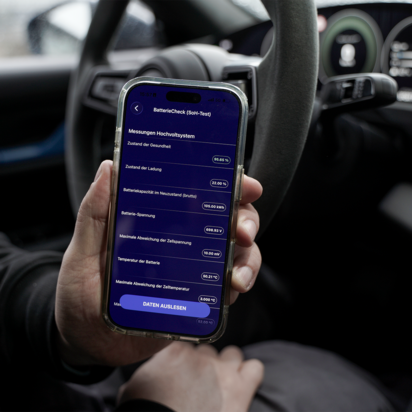
TÜV NORD and Carly analyse SoH data of electric and plug-in hybrid vehicles from various car brands based on around 50,000 measurements.
TÜV NORD and Carly analyse SoH data of electric and plug-in hybrid vehicles from various car brands based on around 50,000 measurements
Lack of transparency in the used car market: without comparable quality indicators, uncertainties arise in valuation and pricing
Overall, electric car batteries have a much longer service life than is often assumed. At the same time, their condition is increasingly becoming the focus of political and industry attention. This is due to new subsidy programmes and political debates surrounding used electric vehicles, which are making battery condition a key factor for price, financing and trust. The median of the analysed State-of-Health (SoH) data is 96 points. At the same time, however, there is a clear wear tipping point: degradation increases significantly from around 90,000 kilometres. This is shown by a recent analysis by TÜV NORD in collaboration with the car tech company Carly, which analysed SoH data for electric and plug-in hybrid vehicles from various car brands and presented it at a live event at the Nürburgring.
High battery condition in the field, significant increase in wear after 90,000 kilometres
An SoH value of 100 corresponds to a fully intact battery when new. Values above 90 are still considered very good in practice and indicate only slight ageing. Between 85 and 90, the battery is said to be in a solid condition with moderate wear. Below 85, the performance of the battery decreases increasingly, which can affect the range and charging behaviour, among other things, and is relevant for the resale value.
Across all brands, the median of all SoH data collected is 96 points. Only 9.9 per cent of vehicles have an SoH value of less than 85 points. The analysis also shows that the SoH decreases comparatively moderately by around 0.7 points per 10,000 kilometres in the first 90,000 kilometres driven. After that, battery degradation accelerates significantly in relation to mileage. From around 90,000 kilometres, the decline averages around 2.3 points per 10,000 kilometres. This trend is particularly evident in newer vehicles, which form the majority of the data basis. At the same time, it can be seen that the annual mileage is at a similar level across the brands analysed. This means that the mileage has no significant influence on the results in the comparison between the brands.
Significant brand differences for older models, equalisation for new vehicles
The analysis shows that the State of Health (SoH) values of electric car batteries increase significantly across brands with increasing year of manufacture. Brands such as Hyundai, Kia and Mercedes-Benz already achieve values in the range of around 90 to over 95 points for older vehicles and increase almost consistently to up to 100 points for newer models. In contrast, manufacturers such as VW, Renault and Citroën start at a much lower level for older models, around 70 to 80 points. This results in a difference of around two to ten SoH points between the brands, depending on the age of the vehicle. However, this gap decreases significantly with newer model years. Current models are mostly in the 97 to 100 point range across all brands and thus achieve a very high and increasingly standardised battery level overall. Hyundai shows particularly high values, while Renault has the lowest SoH values for older model years.
"The used car market for electric cars is currently characterised by a great deal of uncertainty, particularly with regard to the condition of the battery. This is precisely where objective SoH data comes in: For the first time, they make the battery condition comprehensible and comparable, thus replacing to a certain extent the previous assessment based on assumptions. For consumers, dealers and financiers, this is a decisive step towards greater transparency and trust in the market," says Hartmut Abel, CEO of TÜV NORD Mobilität.
Avid Avini, CEO of Carly adds: "Our data shows that batteries are more robust than often assumed, but at the same time age measurably with increasing mileage. Especially against the backdrop of a growing but still uncertain used car market, SoH data is becoming a decisive factor: it creates an objective basis for pricing and purchasing decisions and significantly reduces the risk for all market participants."
About Carly
Carly is an innovative car tech company from Munich that has specialised in the development of technologies and solutions for vehicle repair and maintenance since 2014. The company provides valuable information about the condition of vehicles by reading meaningful data paired with expert tips.
Founded over 150 years ago, we stand for security and trust worldwide. As a knowledge company, we have our sights firmly set on the digital future. Whether engineers, IT security experts or specialists for the mobility of the future: in more than 100 countries, we ensure that our customers become even more successful in the networked world.
