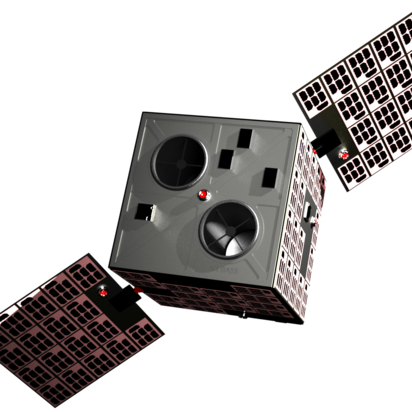
TÜV NORD GROUP is actively involved through its subsidiary ALTER in the construction of the first fully Slovak-developed modular satellite, the design of which will allow its flexible use in various applications. ALTER is playing a central role in the selection of components and testing procedures to ensure that all parts of the modular satellite will be able to withstand the extreme conditions in space, such as radiation and significant temperature fluctuations. It is also responsible for ensuring that the entire project complies with international standards for safety and sustainability.
On its first mission, the satellite will enhance safety in orbit by monitoring space weather and observing space objects. These tasks are crucial for protecting communication and GPS satellites from disruptions caused by solar storms or cosmic radiation and avoiding collisions with space debris. Thanks to the modular design of the satellite platform, it will be possible to adapt the modules for different purposes, such as telecommunications, technology testing, or Earth observation. This will significantly reduce development and production costs and extend the satellite's lifespan by allowing components to be exchanged or upgraded in orbit. "Since each module can be independently procured, tested, or updated, the satellite will also be less susceptible to supply chain delays," explains Pavla Dohanyosova, project manager at ALTER. In the event of bottlenecks, suppliers can simply be changed and components swapped for alternatives without delaying the planned launch.
The subsystems of the modular satellite, such as those used for power supply, attitude, and orbit control, must be harmonized so that they work efficiently together at all times, even if individual modules in the satellite kit should change. "Each subsystem must operate independently and be individually testable, which requires the strict standardization of interfaces at an early stage of the design process," explains Dohanyosova. ALTER is playing a key role here and coordinating two technical work packages to ensure that the entire project meets international standards for safety and sustainability.
Sustainability is a central aspect of the Stephanik project. The project is committed to the "Zero Debris Charter" of the European Space Agency, ESA, and aims to leave no additional space debris in orbit. ALTER is advising on the selection of materials and the launch vehicle, as well as on the development of strategies to avoid collisions in space and ensure the controlled return of the satellite into the Earth's atmosphere at the end of its lifespan. ALTER's experts are contributing their extensive experience from numerous ESA and NASA missions to ensure that all parts of the modular satellite will be able to withstand the extreme conditions in space.
The Stephanik project brings together the expertise of institutions, companies, and research facilities from Slovakia, Spain, and Germany. The goal is to develop a modular satellite platform weighing over 150 kilograms that is distinguished by its versatility.